The Foundation: Enclosure Dimensions and Materials
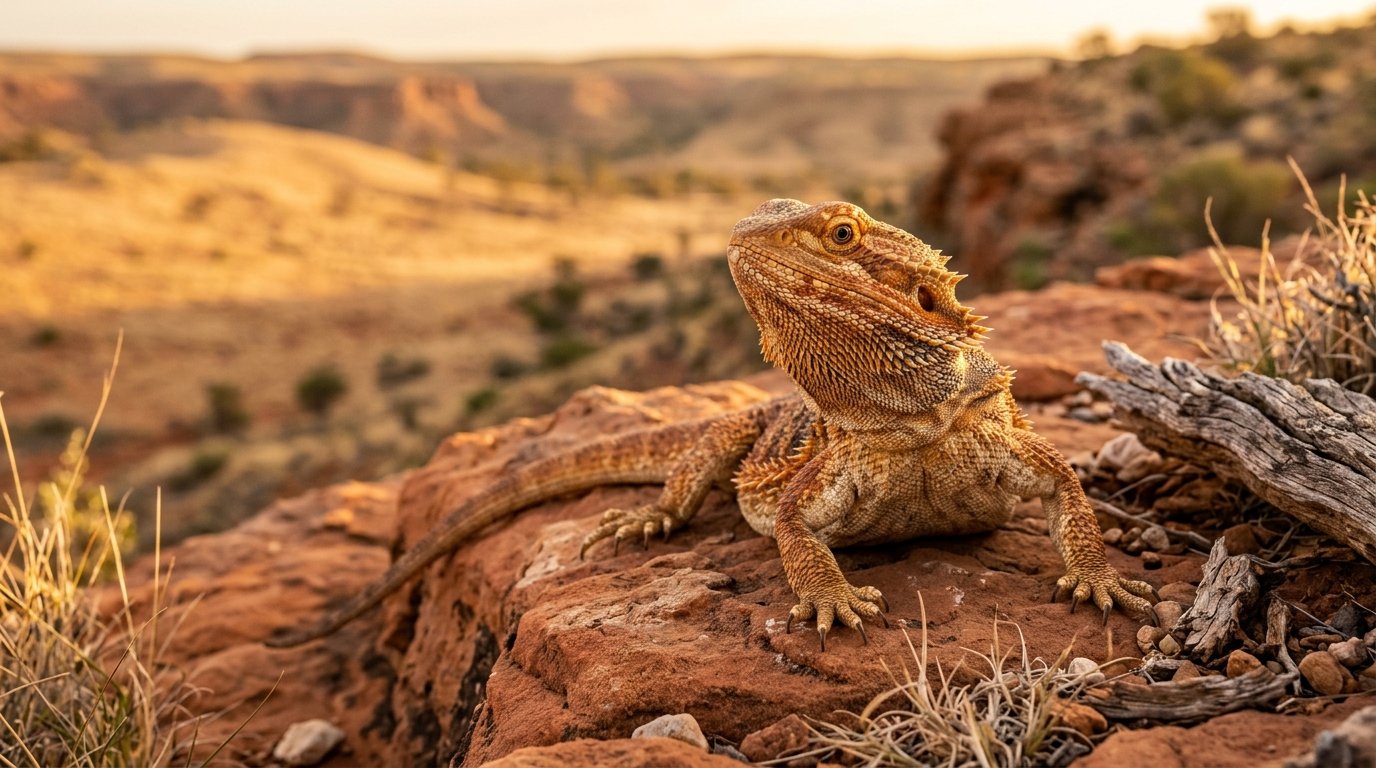
A thriving bearded dragon (Pogona vitticeps) requires a minimum enclosure size of 120 gallons (48" x 24" x 24" or 4x2x2 feet) for an adult. While juveniles can temporarily reside in a 40-gallon breeder, front-opening wooden or PVC enclosures are vastly superior to top-opening glass aquariums. PVC maintains thermal stability without losing ambient warmth, and reaching in from the front prevents triggering your dragon's natural predator evasion reflex caused by overhead shadows.
Crucial Lighting: Linear T5 HO UVB vs Ineffective Coils
UVB radiation is non-negotiable for vitamin D3 synthesis and calcium absorption. Compact coil bulbs do not produce sufficient UVB output across the required surface area. Instead, install a T5 High Output linear tube fixture (such as Arcadia 12% or Zoo Med ReptiSun 10.0 T5 HO) spanning roughly half to two-thirds the enclosure length. Position the tube alongside the primary basking bulb so your dragon receives both heat and UVB concurrently while basking.
Dialing in the Temperature Gradient
Bearded dragons are ectothermic and rely entirely on behavioral thermoregulation. Your enclosure must provide three distinct thermal zones measured with a digital infrared thermometer gun:
- Basking Surface: 100°F – 108°F (38°C – 42°C) for adults; up to 110°F for juveniles.
- Warm Ambient Side: 85°F – 90°F (29°C – 32°C).
- Cool Retreat End: 75°F – 82°F (24°C – 28°C) to allow complete cooling down.
Substrate Selection: Safety First
For young dragons under 10 inches, non-particle substrates such as slate tile, textured ceramic tile, or butcher paper eliminate any risk of accidental impaction. For healthy adult dragons with perfected heating and hydration, a 50/50 blend of organic topsoil and washed playsand creates an enriching, naturalistic burrowing substrate.