
Table of Contents
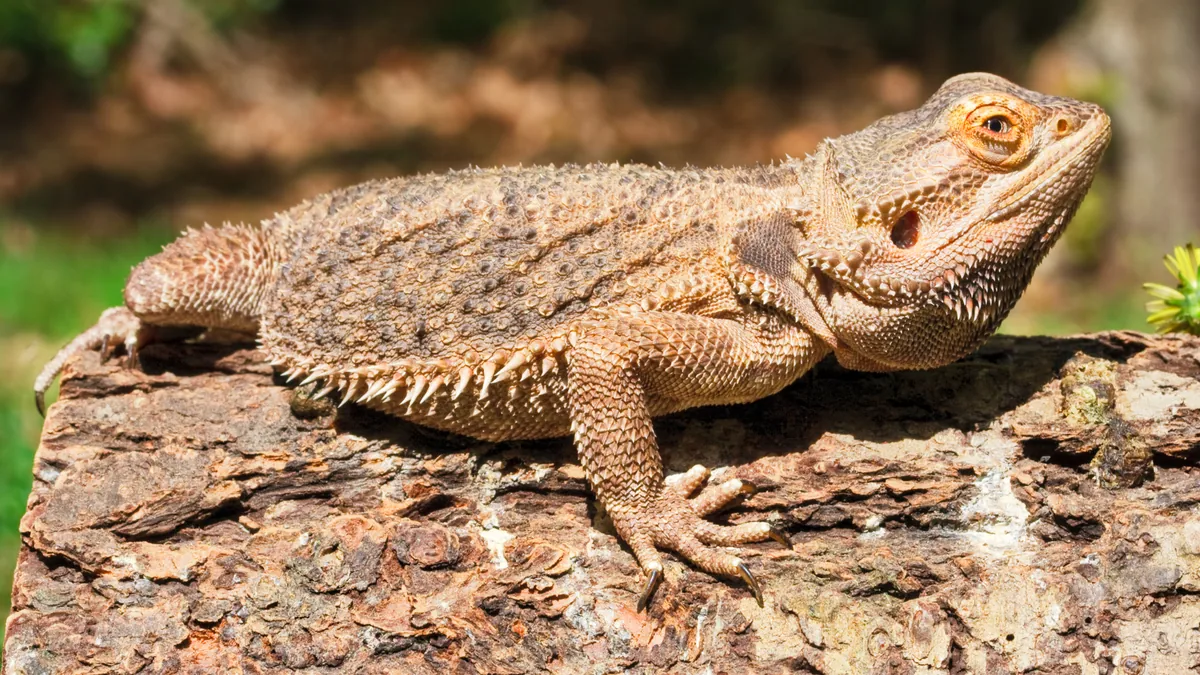
Bearded dragon brumation is a period of reduced activity and metabolism that resembles hibernation. During brumation, a bearded dragon may sleep more, hide for long periods, eat less, and spend less time basking. It is a natural seasonal behavior, but not every captive bearded dragon experiences it.
If your usually active bearded dragon suddenly starts sleeping all day or refusing food, it's reasonable to wonder whether brumation is beginning. The difficulty is that illness, incorrect temperatures, and other health problems can cause similar changes.
Understanding the signs is helpful, but a reptile veterinarian should assess unexpected lethargy or appetite loss before you assume it's brumation.
This guide explains why bearded dragons brumate, how long the process can last, what to monitor, and when unusual behavior needs medical attention.
What Is Bearded Dragon Brumation?
Brumation is a seasonal slowdown in activity and metabolism that helps reptiles conserve energy when environmental conditions become less favorable.
Bearded dragons are ectotherms, meaning they depend on external heat sources to regulate their body temperature. In their natural Australian habitat, cooler weather and reduced food availability can trigger brumation.
During this period, a dragon may retreat into a protected hiding place, become less active, and eat very little. Its energy requirements decrease as its metabolism slows.
Brumation can occur in captivity, too. However, its timing and duration vary, and some healthy captive bearded dragons never show obvious brumation behavior.
Is Brumation the Same as Hibernation?
Brumation and hibernation are similar, but they aren't exactly the same process.
| Feature | Brumation | Hibernation |
|---|---|---|
| Commonly associated with | Reptiles | Certain mammals |
| Main purpose | Energy conservation | Energy conservation |
| Body temperature | Strongly influenced by surroundings | Regulated differently depending on the species |
| Activity | May occasionally wake or move | Varies by species |
| Food intake | Usually greatly reduced | Usually greatly reduced |
| Water intake | Some reptiles may occasionally drink | Varies by species |
A brumating bearded dragon isn't necessarily asleep continuously. Some dragons occasionally change positions, emerge briefly, or drink water.
These behaviors alone cannot establish whether a dragon is healthy.
Why Do Bearded Dragons Brumate?
In the wild, central bearded dragons (Pogona vitticeps) live in parts of Australia's dry inland environment.
As winter approaches, temperatures and daylight hours change. Insects become less available, and cooler conditions make it harder for these reptiles to maintain normal activity.
Brumation helps them conserve energy until conditions improve.
The main environmental influences include:
- Temperature changes: Cooler conditions reduce a reptile's ability to maintain normal activity.
- Shorter daylight hours: Seasonal changes in daylight can influence biological rhythms.
- Food availability: Reduced access to food is part of the natural seasonal environment.
- Internal biological rhythms: Some captive dragons show seasonal behavior even under relatively consistent indoor conditions.
Brumation is also associated with reproductive cycles in some reptiles.
However, a pet bearded dragon doesn't necessarily need to enter brumation every year to remain healthy. Recommendations about deliberately encouraging brumation differ among reptile-care sources and veterinary professionals.
For ordinary pet care, it's best not to force brumation without guidance from a veterinarian experienced with reptiles.
Signs of Brumation in Bearded Dragons
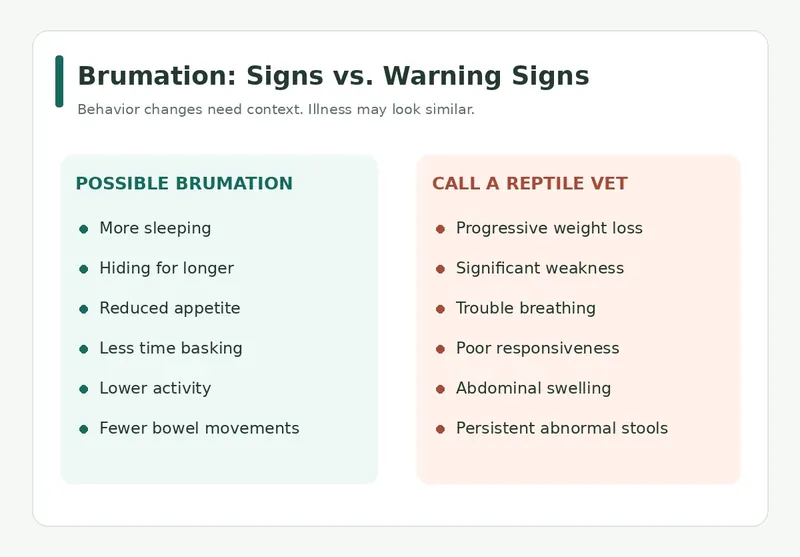
The most recognizable brumation signs are increased sleeping, reduced appetite, hiding, and lower activity levels.
These changes often develop gradually, although individual patterns vary.
1. Sleeping More Than Usual
Your bearded dragon may spend longer periods sleeping or resting in its hide.
A normally active dragon might remain in the same sheltered location for much of the day.
However, unusual sleepiness can also indicate illness or an enclosure that isn't warm enough.
2. Eating Less or Refusing Food
Some bearded dragons lose interest in insects, greens, and other foods as their metabolism slows.
A reduced appetite can accompany brumation, but it isn't proof of brumation.
Parasites, infection, digestive problems, reproductive conditions, and husbandry issues can also cause appetite loss.
3. Spending More Time in Hiding
A dragon preparing to brumate may retreat into a cave, sheltered corner, or other secure hiding area.
You might notice that it spends less time exploring the enclosure or interacting with its surroundings.
4. Basking Less Frequently
Some dragons spend less time beneath their basking lamp when they become less active.
Because reptiles rely on external warmth for digestion and other physiological processes, it's important to check the enclosure temperatures before interpreting this behavior.
5. Moving Less
A brumating dragon may appear sluggish and show little interest in normal activities.
However, severe weakness, an inability to stand normally, or difficulty responding to stimulation is not something to dismiss as brumation.
These changes require prompt veterinary attention.
6. Having Fewer Bowel Movements
When a bearded dragon eats less, it often produces less waste.
Longer intervals between bowel movements can occur during brumation, but they can also result from digestive illness or inappropriate enclosure conditions.
If your dragon has a swollen abdomen, appears uncomfortable, or has been straining, contact a reptile veterinarian.
Quick Reference: Common Brumation Signs
| Behavior | Possible brumation sign? | What to check |
|---|---|---|
| Sleeping for longer periods | Yes | Energy level and responsiveness |
| Reduced appetite | Yes | Body weight and other symptoms |
| Hiding more often | Yes | Enclosure conditions |
| Less basking | Yes | Temperature gradient |
| Fewer bowel movements | Yes | Feeding history and abdominal symptoms |
| Progressive weight loss | Concerning | Veterinary assessment |
| Difficulty breathing | No — warning sign | Urgent veterinary care |
| Severe weakness | No — warning sign | Urgent veterinary care |
Remember: A combination of common signs still doesn't confirm that a bearded dragon is brumating rather than sick.
When Do Bearded Dragons Brumate?
Bearded dragons most commonly show brumation behavior around the cooler months, although captive dragons don't always follow a predictable calendar.
Bearded Dragon Brumation Season in the United States
For many captive bearded dragons in the United States, seasonal changes may become noticeable during fall and winter, roughly from November through February.
However, this isn't a fixed schedule.
Indoor temperatures, artificial lighting, an individual dragon's biological rhythms, and other factors can influence the timing.
Some captive dragons may appear to follow seasonal patterns associated with their Australian ancestry.
| Location | General seasonal context |
|---|---|
| United States | Fall and winter: approximately November–February |
| Australia | Winter: approximately June–August |
| Indoor captive environments | Timing varies and may not follow the local season |
These months describe general seasonal patterns, not a schedule that every bearded dragon must follow.
What Age Do Bearded Dragons Start Brumating?
Brumation is generally discussed in older juvenile and adult bearded dragons, often around a year of age or later.
Younger dragons grow rapidly and have substantial nutritional needs.
If a baby or young juvenile becomes unusually inactive, hides continuously, or stops eating, don't assume it's entering brumation.
A reptile veterinarian should evaluate the change, particularly if the dragon is losing weight or is smaller than expected for its age.
Do All Bearded Dragons Brumate?
No. Some captive bearded dragons brumate regularly, others do so occasionally, and some never show noticeable brumation behavior.
A dragon that continues eating, basking, and behaving normally during winter isn't automatically unhealthy.
There's no reason to deliberately lower its temperatures simply because another bearded dragon is brumating.
How Long Does Bearded Dragon Brumation Last?
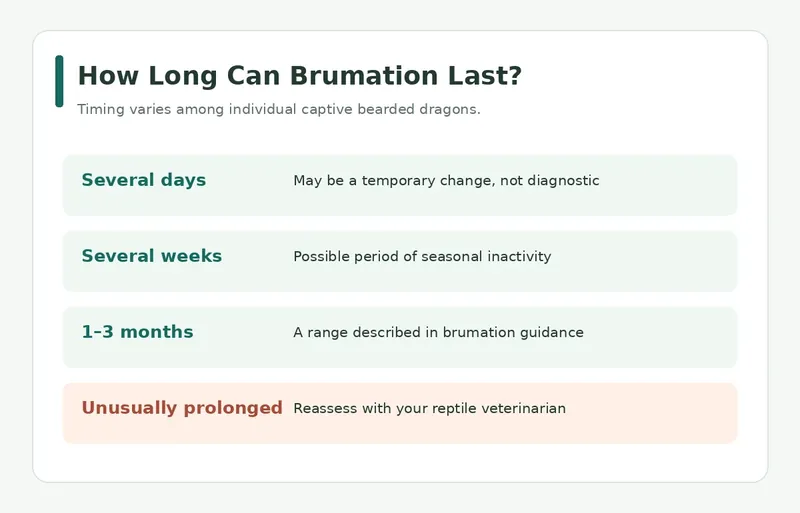
Bearded dragon brumation may last several weeks to a few months, but there is no universal duration.
Some dragons have brief periods of inactivity, while others remain less active for much of the winter.
The length can depend on environmental conditions, age, individual biology, and health.
| Duration | What it means |
|---|---|
| Several days | May be an early or temporary change; not enough to confirm brumation |
| Several weeks | Possible seasonal dormancy |
| One to three months | A duration reported in brumation guidance |
| Longer or unusually prolonged inactivity | Warrants veterinary reassessment |
These ranges aren't medical thresholds or instructions to leave a dragon undisturbed for a specified number of weeks.
A healthy dragon undergoing brumation should generally maintain its body condition.
If it loses weight progressively, becomes visibly thin, or develops other symptoms, seek veterinary care instead of waiting for a predicted end date.
Bearded Dragon Brumation vs. Illness: How to Tell the Difference
This is one of the most important things to understand.
Brumation and illness can look remarkably similar. Both can involve reduced movement, appetite loss, and prolonged hiding.
Even experienced keepers may not be able to distinguish them by observation alone.
| Observation | May occur during brumation | Reason for veterinary concern |
|---|---|---|
| Appetite | Reduced or absent | Refusal to eat with weight loss or other symptoms |
| Activity | Lower than usual | Severe weakness, collapse, or inability to move normally |
| Body weight | Relatively stable | Progressive or substantial loss |
| Breathing | No obvious respiratory distress | Wheezing, discharge, or labored breathing |
| Eyes | No abnormal discharge | Swelling, discharge, or persistent abnormal appearance |
| Stool | Reduced frequency | Diarrhea, blood, straining, or other abnormalities |
| Behavior | Hiding and sleeping more | Sudden deterioration or poor responsiveness |
A reptile veterinarian may recommend an examination, fecal testing, or other diagnostic procedures depending on the dragon's symptoms.
Could It Be Something Other Than Brumation?
Yes. Several problems can cause similar behavior.
Incorrect temperatures: If the enclosure is too cold, digestion and activity may slow even when the dragon isn't experiencing normal seasonal brumation.
Intestinal parasites: Parasites can contribute to appetite loss, changes in stool, and weight loss.
Respiratory illness: Breathing problems, nasal discharge, and unusual weakness may indicate infection.
Digestive problems: Constipation or gastrointestinal obstruction can produce lethargy, appetite loss, and abnormal bowel movements.
Reproductive conditions: Female bearded dragons may develop problems involving egg production or egg laying, even without exposure to a male.
The important distinction is that brumation is a physiological process, while these conditions may require treatment.
Seek urgent veterinary attention if your dragon has difficulty breathing, collapses, cannot stand, or becomes severely weak.
How to Care for a Bearded Dragon During Brumation
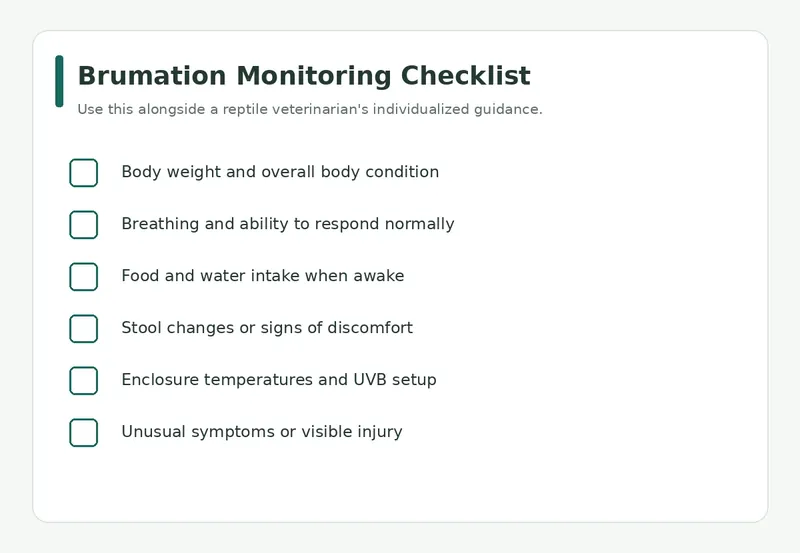
If a veterinarian has confirmed that your bearded dragon is healthy and its behavior is consistent with brumation, your next priority is safe monitoring.
Brumation care should be individualized. Avoid following a fixed schedule designed for another animal without understanding your own dragon's health and enclosure conditions.
Step 1: Arrange a Reptile Veterinary Health Check
Before treating reduced activity as brumation, arrange an appointment with a veterinarian experienced in reptile medicine.
The veterinarian can assess the dragon's body condition, diet, husbandry, and potential health problems.
Depending on the circumstances, a fecal examination or other testing may be recommended.
This matters because an unhealthy dragon may become more seriously ill during a prolonged period of reduced feeding and activity.
Step 2: Check Enclosure Temperature and UVB Lighting
Review the enclosure's normal temperature gradient, basking area, and UVB setup.
Use accurate thermometers and appropriate measuring equipment rather than relying on the temperature displayed by a single wall-mounted gauge.
Different reptile-care sources recommend different approaches to light and heat during brumation. Some describe carefully managed seasonal reductions, while others recommend maintaining suitable captive conditions and investigating unusual inactivity.
For a typical pet owner, deliberately turning off heat and UVB or exposing a dragon to unusually cold conditions should not be attempted without appropriate veterinary guidance.
If your veterinarian recommends an individualized brumation plan, follow the temperatures and lighting schedule they provide.
Step 3: Provide a Secure Hiding Area
A bearded dragon may prefer a dark, sheltered hiding place while becoming less active.
A suitable hide should be stable, easy to access, and large enough for the dragon to rest comfortably.
Keep the enclosure clean and check that furnishings cannot collapse or trap the animal.
There's no need to repeatedly pull a resting dragon out of its hide simply to see whether it's awake.
However, reducing unnecessary disturbance doesn't mean ignoring health changes.
Step 4: Monitor Body Weight
A digital gram scale is useful for tracking changes in body weight.
With veterinary guidance, weigh your dragon periodically using the same scale and a consistent method.
A weekly record is often useful, although the appropriate monitoring frequency depends on how easily the dragon can be assessed without excessive disturbance.
Record the date, weight, appetite, activity, and any unusual symptoms.
| Date | Weight (g) | Appetite | Activity | Notes |
|---|---|---|---|---|
| Week 1 | ____ | ____ | ____ | ____ |
| Week 2 | ____ | ____ | ____ | ____ |
| Week 3 | ____ | ____ | ____ | ____ |
| Week 4 | ____ | ____ | ____ | ____ |
This simple record gives your veterinarian more useful information than an estimate of how long your dragon has been sleeping.
Do not wait for a particular percentage of weight loss if your dragon is becoming visibly thinner or unwell.
Step 5: Monitor Hydration
Provide access to clean water as advised for your dragon's enclosure and care plan.
A brumating dragon may drink less frequently, but dehydration can still become a concern.
Signs such as marked weakness, abnormal appearance, or deteriorating body condition deserve veterinary assessment.
Don't force water into a sleepy or unresponsive dragon's mouth. Incorrect administration can cause choking or aspiration.
If you're concerned about hydration, ask your reptile veterinarian for advice instead of attempting home treatment.
Step 6: Handle Feeding Carefully
A bearded dragon's appetite may decrease substantially during brumation.
However, feeding decisions depend on whether the dragon is actually brumating, its temperature, and its individual health.
Reptiles need suitable warmth to digest food properly.
Don't force-feed a dragon that appears to be brumating, and don't intentionally withhold food from an otherwise active dragon to make it enter brumation.
Your veterinarian can advise whether feeding should continue, be adjusted, or be temporarily withheld as part of a supervised plan.
Step 7: Keep a Simple Monitoring Routine
Check the enclosure regularly, make sure equipment is functioning correctly, and watch for unexpected changes.
Important observations include:
- Body weight and visible body condition
- Breathing and responsiveness
- Food and water intake when awake
- Stool or urate changes
- Enclosure temperatures
- Signs of injury or discomfort
If anything seems abnormal, contact your veterinarian rather than assuming it is part of brumation.
Should You Wake a Brumating Bearded Dragon?
A bearded dragon that has been assessed as healthy and is undergoing an appropriate brumation period generally shouldn't be disturbed unnecessarily.
Repeated handling may interrupt rest.
However, avoiding disturbance is not the same as leaving the animal completely unchecked.
Weight monitoring, enclosure maintenance, and veterinary reassessment may still be necessary.
If your dragon is severely weak, losing weight, having breathing difficulties, or showing other concerning symptoms, don't allow it to remain inactive simply because you think it is brumating.
Seek veterinary care.
Should You Turn Off Heat and UVB During Brumation?
There is no single lighting and heating schedule that should automatically be applied to every pet bearded dragon.
Some specialist husbandry guides describe reducing light and heat to simulate winter. Other veterinary resources caution against deliberate brumation induction or advise keeping captive conditions suitable while medical causes of inactivity are investigated.
The safest approach for an inexperienced owner is not to turn off essential equipment independently.
Before changing lighting or heat, establish whether the dragon is healthy and obtain a care plan from a reptile veterinarian.
This is especially important when the dragon is young, underweight, unwell, or has recently stopped eating.
Can You Force a Bearded Dragon Into Brumation?
Deliberately inducing brumation is not necessary for routine pet keeping.
Some experienced breeders use controlled seasonal changes for reproductive management, but this should not be confused with ordinary day-to-day care.
Reducing temperatures, shortening daylight hours, or withholding food without an individualized plan can create health risks.
If your bearded dragon remains active during winter, continue providing appropriate care rather than trying to make it sleep.
What Happens When a Bearded Dragon Wakes Up From Brumation?
As a bearded dragon comes out of brumation, it may gradually spend more time awake, move around its enclosure, and resume basking.
Appetite may return gradually rather than immediately.
Some dragons become more active as their normal daily routines resume.
Signs Your Bearded Dragon May Be Waking Up
You may notice:
- Spending more time outside the hide
- Basking more frequently
- Increased interest in food
- More exploration
- Returning to a normal activity pattern
Continue monitoring weight, behavior, and overall condition during this transition.
Feeding After Brumation
Before resuming a normal feeding routine, make sure the enclosure provides an appropriate temperature gradient and functional UVB lighting.
Offer suitable food according to your veterinarian's recommendations and the dragon's normal age-appropriate diet.
Avoid compensating for weeks of reduced eating with excessive food.
If your dragon remains unwilling to eat, loses weight, or appears weak after waking, arrange a veterinary examination.
What If Your Bearded Dragon Doesn't Wake Up?
There isn't one exact date when every bearded dragon should become active again.
However, persistent inactivity should not be dismissed indefinitely.
If a dragon is unusually unresponsive, loses weight, or develops additional symptoms, contact a reptile veterinarian promptly.
A veterinarian can help determine whether the behavior is seasonal or related to another health issue.
When Should You Contact a Reptile Veterinarian?
Contact a reptile veterinarian when your bearded dragon develops unexplained inactivity, refuses food unexpectedly, or shows signs that could indicate illness.
Seek urgent veterinary care for:
- Difficulty breathing or obvious respiratory distress
- Collapse or inability to stand normally
- Severe weakness or poor responsiveness
- Significant or progressive weight loss
- Serious abdominal swelling or straining
- Sudden deterioration in physical condition
Persistent diarrhea, discharge from the nose or eyes, and other abnormal symptoms also warrant veterinary assessment.
If your dragon is young, underweight, or already has health problems, don't assume brumation is the explanation for reduced activity.
Bearded Dragon Brumation FAQs
What are the first signs of bearded dragon brumation?
Common signs include sleeping more, hiding, reduced appetite, less basking, and lower activity levels. These changes can also indicate illness or unsuitable enclosure conditions, so a reptile veterinarian should assess unexpected behavior changes before you assume brumation.
How long do bearded dragons brumate?
Brumation can last several weeks to a few months, depending on the individual and environmental conditions. Not all dragons brumate, and there is no fixed duration. Progressive weight loss or other concerning symptoms require veterinary attention regardless of how long the dragon has been inactive.
Do bearded dragons eat during brumation?
Many bearded dragons eat very little or stop eating during brumation because their metabolism slows. Feeding decisions should depend on their health and temperature conditions. Don't force-feed a sleepy dragon or deliberately withhold food to induce brumation.
Should I wake my bearded dragon during brumation?
Avoid unnecessary disturbance when a veterinarian has confirmed that your dragon is healthy and undergoing brumation. However, regular checks and appropriate monitoring remain important. If the dragon is losing weight, severely weak, or showing signs of illness, seek veterinary advice.
Do all bearded dragons brumate?
No. Some captive bearded dragons brumate regularly, others occasionally, and some never show obvious brumation behavior. A healthy dragon does not automatically need to enter dormancy every winter. Don't force brumation simply because other dragons experience it.
Can baby bearded dragons brumate?
Brumation-like behavior in babies and young juveniles deserves particular caution because they are still growing and need regular nutrition. If a young bearded dragon stops eating, becomes inactive, or loses weight, arrange a reptile veterinary examination.
Do bearded dragons brumate in captivity?
Yes, some captive bearded dragons show brumation behavior even under managed indoor conditions. However, not every dragon follows a consistent seasonal pattern. Sudden inactivity or appetite loss should be evaluated rather than automatically attributed to brumation.
How do I know if my bearded dragon is brumating or sick?
You cannot reliably distinguish brumation from illness using behavior alone. Both may cause inactivity and appetite loss. Weight changes, breathing problems, weakness, and other symptoms provide important clues, but a reptile veterinarian can assess the animal and determine whether further testing is needed.
Final Thoughts
Bearded dragon brumation can be a normal part of seasonal reptile behavior, but it isn't something every pet must experience.
Increased sleeping, reduced appetite, and hiding may indicate brumation. They can also be early signs of illness.
The best approach is to check your dragon's health, maintain appropriate husbandry, and monitor its condition rather than assuming inactivity is harmless.
If you are unsure whether your bearded dragon is brumating, a veterinarian experienced in reptile medicine is the most reliable source of individualized advice.
Sources and Further Reading
This article is a research-based educational guide. It is not a substitute for veterinary diagnosis or treatment.
- VCA Animal Hospitals — Brumation in Bearded Dragons
- Vet Help Direct — What's Wrong With My Bearded Dragon?
- ReptiFiles — Bearded Dragon Brumation
- Swell Reptiles — Bearded Dragon Brumation Explained
Editorial disclosure: RegularPetCare publishes research-based pet care information. This article has not been represented as personally tested or veterinary-reviewed.