Table of Contents
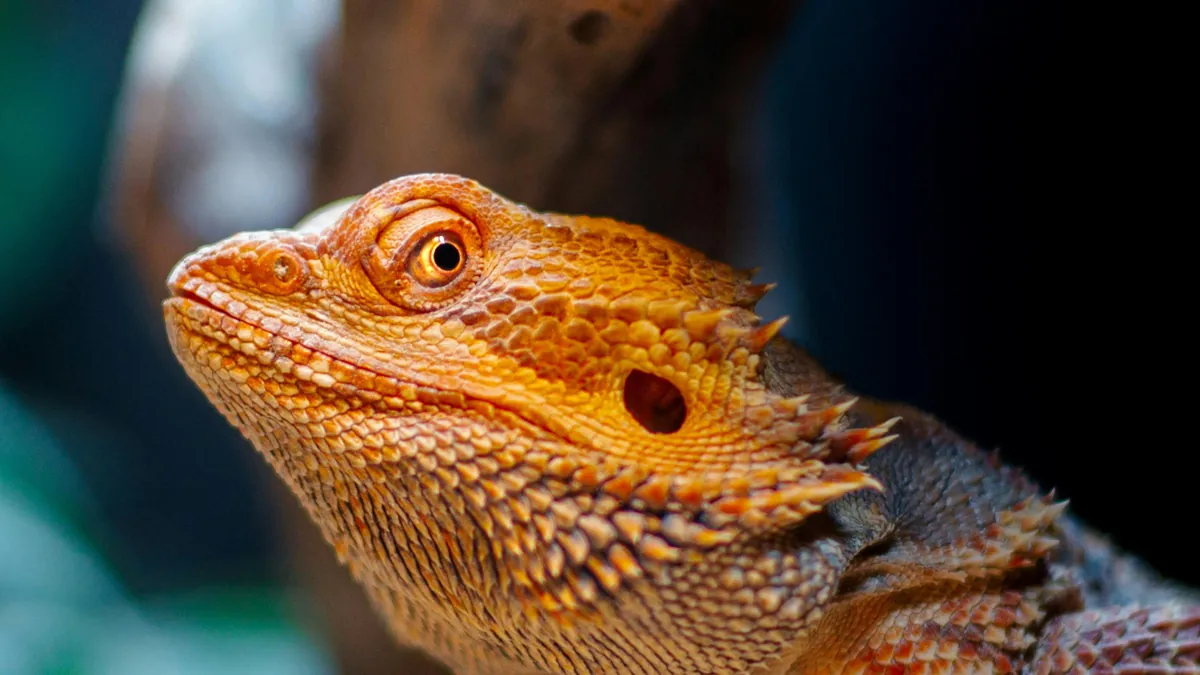
Bearded dragon shedding is the natural process of replacing old skin as a dragon grows and renews its outer scales. Young bearded dragons shed more often because they grow quickly, while adults usually shed less frequently. Their skin often turns pale or white before peeling away in patches.
If you've noticed white patches on your bearded dragon's back, loose skin around its legs, or unusual rubbing against enclosure decorations, your dragon may be getting ready to shed.
Most healthy bearded dragons complete shedding without much assistance. But when old skin stays tightly attached, especially around the toes, tail tip, or eyes, it can become a health concern.
This guide explains how normal shedding works, how often it happens, what you can safely do to help, and when it's time to contact a reptile veterinarian.
What Is Bearded Dragon Shedding?
Shedding, medically called ecdysis, is the process of losing the old outer layer of skin and replacing it with a newer layer.
Bearded dragons have scales made primarily of keratin, the same structural protein found in human hair and nails. As the dragon grows and its skin renews, the older surface eventually separates and comes away.
Unlike many snakes, which typically shed their outer skin in one continuous piece, bearded dragons usually shed in sections.
You may see old skin peeling from the head, back, legs, belly, or tail at different times.
Some areas may look pale while others retain their usual color. This uneven appearance is generally normal during a shed.
Shedding continues throughout a bearded dragon's life, although the frequency changes as the animal matures.
Why Do Bearded Dragons Shed Their Skin?
Bearded dragons shed for several natural reasons:
- Growth: Young dragons need to replace their outer skin as their bodies develop.
- Skin renewal: Shedding removes aging outer skin and replaces it with a newer layer.
- Normal biological maintenance: Ecdysis is part of the regular life cycle of reptiles.
Shedding is not automatically a sign of poor health.
However, a dragon that repeatedly struggles to shed may have an environmental or medical problem that needs attention.
How Often Do Bearded Dragons Shed?
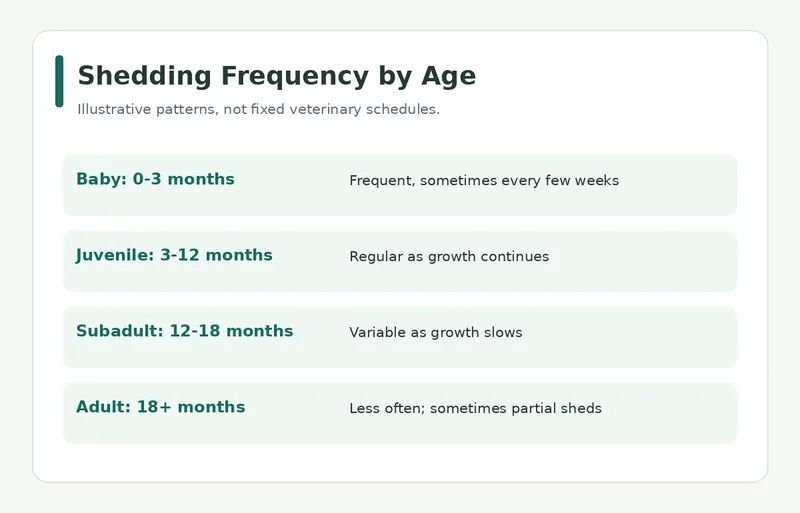
Baby and juvenile bearded dragons generally shed more frequently than adults. The exact schedule depends on growth rate, health, nutrition, and individual differences.
Young dragons can develop noticeable patches of new shed every few weeks during rapid growth. Adults may shed only a few times per year, sometimes in smaller, less obvious patches.
Bearded Dragon Shedding Frequency by Age
| Life stage | Typical shedding pattern | What to expect |
|---|---|---|
| Baby: approximately 0–3 months | Frequent; sometimes every few weeks | Rapid growth and repeated shedding |
| Juvenile: approximately 3–12 months | Regular but gradually less frequent | Different body areas may shed separately |
| Subadult: approximately 12–18 months | Variable as growth slows | Longer intervals between sheds |
| Adult: approximately 18+ months | Usually less frequent; often several times yearly | Partial or localized shedding |
These are broad patterns, not fixed veterinary schedules. A dragon's size, growth rate, and individual development matter more than an exact number of days.
Do Baby Bearded Dragons Shed More Often?
Yes. Baby bearded dragons grow rapidly, so they generally shed more often than older dragons.
You might notice one shedding cycle finishing and another beginning relatively soon afterward.
This does not necessarily mean something is wrong.
However, baby dragons are particularly vulnerable to problems involving retained shed around their small toes and tail tips.
Check those areas regularly without pulling on attached skin.
How Often Do Adult Bearded Dragons Shed?
Adult bearded dragons typically shed less often because their growth has slowed considerably.
An adult might shed around its head or legs without shedding the entire body at the same time.
It's also possible for months to pass between noticeable sheds.
A healthy adult does not need to shed according to a strict calendar.
Instead of counting the number of weeks since the last shed, pay attention to the dragon's appetite, body condition, skin, and overall behavior.
How Long Does Bearded Dragon Shedding Take?
A bearded dragon may complete an individual patch of shedding over a day or several days, while a broader shedding cycle can extend over a week or longer.
There is no exact duration that applies to every dragon.
One area of skin may peel away quickly while another takes longer to loosen.
| Stage | What happens |
|---|---|
| Before shedding | Skin becomes dull, gray, or pale |
| Skin separation | Old skin begins lifting from the new layer |
| Active shedding | Loose skin flakes or peels away in sections |
| Completion | Most detached skin falls away, revealing the new surface |
This is a general sequence, not a guaranteed timeline.
If skin remains firmly attached in a sensitive area, or you notice swelling, discoloration, or pain, have a reptile veterinarian assess it rather than waiting for a particular number of days.
Signs Your Bearded Dragon Is About to Shed
The most recognizable signs are dull-looking skin, pale patches, increased rubbing, and changes in behavior.
Some dragons continue acting normally, while others become more sensitive to handling.
1. Skin Turns White, Gray, or Dull
A common early sign is a change in the appearance of the skin.
Areas that are normally brown, orange, yellow, or another color may look washed out, grayish, or almost white.
This happens as the older skin begins separating from the newer layer beneath it.
The color change may occur across the back, legs, tail, or head.
A pale patch that later loosens and peels is often part of normal shedding. A patch that looks swollen, inflamed, injured, or unusually discolored deserves closer attention.
2. Rubbing Against Rocks and Branches
Bearded dragons naturally rub their bodies against textured surfaces to loosen old skin.
You may see a dragon brushing its head against a branch, moving its body along a rock, or rubbing its legs on enclosure decorations.
This behavior is often normal when skin is ready to detach.
However, repeated frantic rubbing, visible injury, or rubbing accompanied by other symptoms may indicate irritation or a health problem.
3. Peeling or Flaking Skin
As shedding progresses, the old skin starts lifting away.
You might find small pieces inside the enclosure or notice larger flakes hanging loosely from the dragon's body.
Bearded dragons generally shed in patches rather than removing one complete layer at once.
Loose pieces should fall away naturally as the dragon moves and rubs against suitable surfaces.
Do not pull skin simply because it looks ready to come off.
4. Reduced Appetite
Some bearded dragons show less interest in food while shedding.
They may eat smaller amounts or temporarily become more selective.
However, appetite loss is not proof that a dragon is shedding normally.
If your dragon refuses food, loses weight, becomes lethargic, or shows additional symptoms, consult a reptile veterinarian.
5. Increased Irritability
Shedding can make some dragons less tolerant of handling.
A normally calm dragon may move away, puff its beard, or appear uncomfortable when touched.
The skin may be sensitive as older layers loosen.
Giving the dragon more space and reducing unnecessary handling can help avoid additional stress.
6. Hiding More Than Usual
Some bearded dragons become quieter or spend more time resting during a shedding cycle.
Occasional changes in behavior aren't unusual.
But continuous hiding, marked weakness, abnormal breathing, or persistent inactivity should not automatically be attributed to shedding.
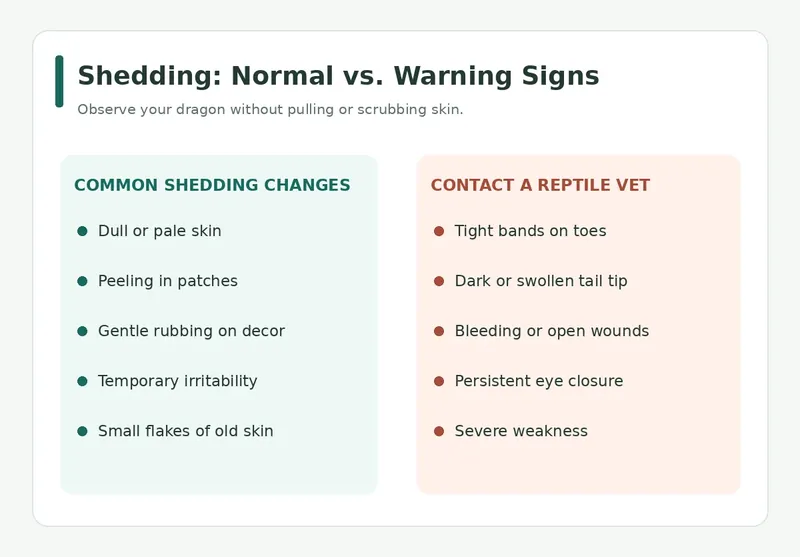
Normal Shedding Signs vs. Warning Signs
| Common shedding changes | Signs that need attention |
|---|---|
| Pale or dull skin | Red, swollen, bleeding, or damaged skin |
| Loose skin peeling in patches | Tight skin bands around toes or tail |
| Occasional rubbing on decorations | Repeated rubbing that causes injury |
| Mild changes in appetite | Appetite loss with weakness or weight loss |
| Temporary irritability | Severe lethargy or unusual unresponsiveness |
| Small flakes of old skin | Darkening or swelling of a toe or tail tip |
When in doubt, a reptile veterinarian can help determine whether the changes are part of normal shedding.
How to Help a Bearded Dragon Shed Safely
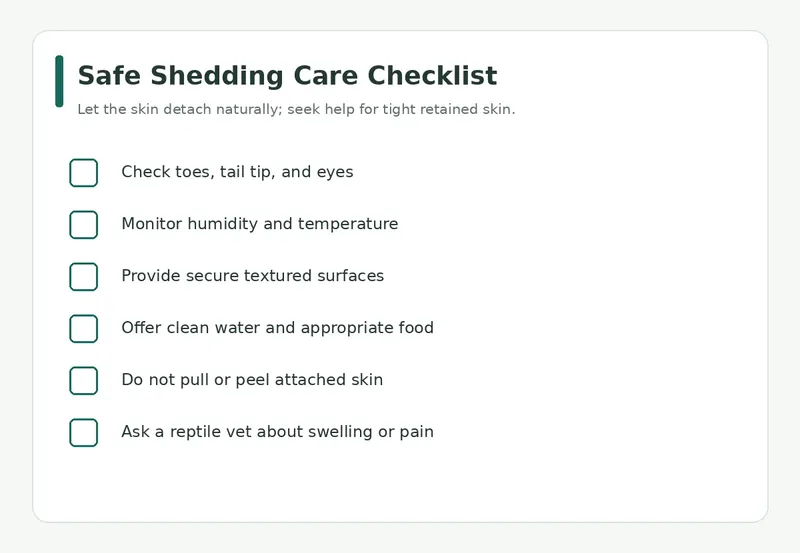
The best way to help a bearded dragon shed is to maintain appropriate enclosure conditions, support normal hydration, provide safe textured surfaces, and avoid pulling on its skin.
Most healthy dragons do not need daily bathing, scrubbing, or manual shed removal.
Follow these steps to support a normal shedding cycle.
Step 1: Check Enclosure Humidity
Bearded dragons are adapted to relatively dry environments, but excessively dry conditions can contribute to shedding problems.
A commonly recommended ambient humidity range is approximately 30–40%, although the appropriate conditions can vary within the enclosure.
Use a reliable digital hygrometer to monitor humidity rather than guessing.
A localized humid hide or appropriately maintained moist digging area may provide additional moisture during shedding without making the entire enclosure damp.
Avoid constantly soaking the substrate or creating persistently wet conditions.
Step 2: Maintain Proper Heating and UVB Lighting
An appropriate temperature gradient helps bearded dragons regulate their body temperature and support normal physiological functions.
Keep the existing basking and cooler zones within species-appropriate ranges.
Make sure the UVB lighting is suitable for the enclosure and installed according to the manufacturer's instructions.
Do not lower the enclosure temperature to make skin peel faster.
If you are unsure whether your lighting or heating setup is appropriate, consult a reptile-care professional or veterinarian.
Step 3: Provide Textured Surfaces
Safe rocks, cork bark, and securely positioned branches give your dragon surfaces to rub against.
These materials help loosen skin that is already ready to detach.
Choose decorations with stable edges and avoid surfaces that are sharp enough to cause injury.
Make sure heavy items cannot shift or fall onto the dragon.
Step 4: Support Normal Hydration
Make fresh drinking water available according to your dragon's husbandry needs.
Provide a balanced, age-appropriate diet with suitable vegetables and feeder insects.
A well-hydrated dragon may be less likely to develop some shedding problems, but hydration alone cannot correct every cause of retained shed.
Do not force water into a dragon's mouth or assume that soaking automatically corrects dehydration.
Step 5: Avoid Pulling Loose Skin
This is one of the most important shedding-care rules.
Even when old skin looks dry and detached, some portions may still be connected to the newer skin underneath.
Pulling can damage healthy tissue, cause bleeding, and create an opening for infection.
Let your dragon remove its shed naturally.
If skin is stuck or you are concerned about a sensitive body area, ask a reptile veterinarian for guidance.
Step 6: Reduce Unnecessary Handling
Some dragons tolerate handling normally during shedding, while others become irritable.
If your dragon moves away or shows signs of stress, give it space.
Avoid rubbing or scratching peeling skin while handling.
Continue necessary health checks, but don't repeatedly disturb your dragon simply to inspect every patch of loose skin.
Should You Bathe a Bearded Dragon During Shedding?
A brief, shallow lukewarm soak may help soften stubborn, non-constricting patches of retained skin in some cases.
However, routine daily bathing is not necessary for every healthy bearded dragon during shedding.
Some reptile-care resources recommend frequent soaking, while others emphasize proper humidity, hydration, and natural removal without unnecessary intervention.
If your veterinarian recommends a bath:
- Use a clean, shallow container with lukewarm—not hot—water.
- Keep the water shallow enough for the dragon to stand comfortably with its head well above the surface.
- Supervise the dragon continuously.
- Follow the veterinarian's recommended duration.
- Remove the dragon immediately if it becomes distressed, weak, or struggles to keep its head above water.
- Dry it gently and return it to its appropriately heated enclosure.
Never leave a bearded dragon unattended in water.
Avoid soaps, oils, fragrances, or shedding chemicals unless specifically prescribed.
If a toe, tail tip, or eye area has retained shed, don't delay veterinary care while trying repeated baths.
What Is Stuck Shed in Bearded Dragons?
Stuck shed, medically described as dysecdysis when shedding is abnormal or incomplete, occurs when old skin fails to detach properly.
Small patches of old skin are not always an emergency, but retained skin can become dangerous when it forms tight bands around narrow parts of the body.
For example, a ring of old skin around a toe can gradually restrict blood circulation.
This may cause swelling, discoloration, tissue damage, and eventually loss of the affected digit if left untreated.
Common Causes of Stuck Shed
Several factors can contribute to abnormal shedding:
- Inappropriate humidity or hydration
- Incorrect enclosure temperatures
- Lack of suitable rubbing surfaces
- Injury or scar tissue
- Underlying illness
- Poor overall husbandry
- Nutritional problems
Repeated shedding difficulties should prompt a review of the dragon's environment and a veterinary health assessment.
Stuck Shed on Bearded Dragon Toes
Toes are among the most important areas to check during shedding.
A narrow band of old skin can tighten around a toe as the surrounding tissue changes.
Look for:
- A visible ring of retained skin
- Swelling around a toe
- Dark or abnormal discoloration
- Difficulty using the affected foot
- Signs of discomfort
If retained skin is forming a tight ring around a toe, contact a reptile veterinarian promptly.
If a toe becomes dark, swollen, or visibly damaged, seek urgent veterinary attention.
Do not use scissors, tweezers, or forceful pulling to remove attached skin.
Stuck Shed on the Tail Tip
The tail tip is another vulnerable area.
Old skin may become wrapped around the end of the tail, creating constriction.
Check for tight bands, unusual darkening, swelling, or damage to the tail tip.
A dark tail tip is not always caused by retained shed; injuries and other diseases can produce similar symptoms.
If the tail is darkening, shriveling, or showing signs of tissue damage, seek urgent reptile veterinary care.
Stuck Shed Around the Eyes
Retained skin around the eyelids can irritate the eye and surrounding tissue.
Watch for:
- Persistent eye closure
- Swelling
- Discharge
- Repeated rubbing of the face
- Visible skin stuck around the eyelid margin
Unlike snakes, bearded dragons have movable eyelids. Do not attempt to remove an assumed transparent eye cap.
Never rub the eye, pull skin from the eyelid, or apply eye medications without veterinary instructions.
Eye swelling, discharge, persistent closure, or suspected injury warrants prompt veterinary assessment.
Stuck Shed Around the Beard and Spikes
Old skin may remain around the beard, head spikes, or other textured areas.
Some small pieces fall away naturally as the dragon moves and rubs against its surroundings.
Make sure the enclosure has safe rubbing surfaces and appropriate environmental conditions.
If the skin is firmly attached, inflamed, or repeatedly fails to shed, contact your reptile veterinarian.
Do not tug on skin attached to spikes.
How to Tell Normal Shedding From a Shedding Problem
The main difference is whether the old skin separates naturally without causing injury or restricting circulation.
| Observation | Normal shedding | Possible problem |
|---|---|---|
| Skin appearance | Dull, pale, or white before peeling | Inflamed, damaged, or persistently abnormal |
| Skin removal | Old skin comes away naturally | Skin remains tightly attached |
| Body areas | Head, legs, back, and tail may shed separately | Tight constriction around toes or tail |
| Behavior | Mild irritability or occasional rubbing | Severe distress, weakness, or injury |
| Eyes | No persistent swelling or discharge | Eye closure, swelling, or discharge |
| Appetite | May temporarily decrease | Persistent appetite loss with other symptoms |
| Skin after shedding | Normal-looking new skin | Bleeding, wounds, or abnormal discoloration |
If your dragon develops a medical warning sign, do not wait for the shedding cycle to finish before seeking help.
Why Is My Bearded Dragon Not Shedding?
If your bearded dragon hasn't shed recently, it doesn't automatically indicate a health problem.
Adult dragons shed less frequently than rapidly growing juveniles.
Shedding frequency also depends on individual growth rate and the timing of skin renewal.
A healthy adult that is eating normally, maintaining its weight, and behaving as expected may simply not be ready to shed.
However, a young dragon with poor growth, appetite problems, or persistent health changes may need veterinary evaluation.
Do not attempt to trigger shedding by changing temperatures, soaking excessively, or applying chemical products.
Why Is My Bearded Dragon Turning White but Not Shedding?
A bearded dragon's skin may become pale or whitish before it begins peeling.
This can occur as the older outer skin separates from the newer layer underneath.
Some body areas may remain pale for longer than others.
If the skin gradually loosens and your dragon otherwise appears healthy, the change may be part of a normal shedding cycle.
However, not every white patch is caused by shedding.
Persistent patches that look unusual, spread without peeling, become inflamed, or occur alongside other signs of illness should be assessed by a reptile veterinarian.
Do Bearded Dragons Stop Eating When Shedding?
Some bearded dragons eat less while shedding, but others continue eating normally.
Changes in appetite may occur alongside temporary irritability or reduced activity.
However, complete or prolonged food refusal should not automatically be blamed on shedding.
Monitor your dragon's body weight, activity, stool, and enclosure conditions.
If appetite loss continues, particularly with weight loss or lethargy, arrange a veterinary examination.
Avoid force-feeding unless a veterinarian specifically directs you to do so.
Is Shedding Painful for Bearded Dragons?
Normal shedding should not cause significant injury, but some dragons may experience temporary discomfort or sensitivity while the skin loosens.
This may explain why a dragon becomes more irritable or less interested in handling.
Severe pain is not a normal part of shedding.
If the skin is bleeding, swollen, tightly constricting a toe, or visibly damaged, the dragon may have a problem that requires medical treatment.
Never pull attached skin to speed up the process.
Can You Pull Shedding Skin Off a Bearded Dragon?
No. Avoid pulling attached shedding skin.
Even if a piece looks loose, tugging may tear skin that isn't ready to separate.
Bearded dragons usually remove loose skin naturally by moving against safe enclosure decorations.
If retained skin is causing concern, especially around the toes, tail tip, or eyes, a reptile veterinarian can determine whether professional removal is needed.
Do not use tweezers, scissors, adhesive tape, or abrasive brushes on attached skin.
How to Prevent Shedding Problems
Good husbandry is the foundation of healthy shedding.
Daily Husbandry Checklist
- Check enclosure temperatures and heating equipment.
- Make sure UVB lighting is working as intended.
- Monitor humidity with a reliable hygrometer.
- Provide access to suitable water and a balanced diet.
- Keep safe textured rocks or branches available.
- Check the toes, tail tip, and eye area for abnormalities.
- Remove waste and keep enclosure surfaces clean.
- Watch for changes in appetite, activity, or body condition.
Not every shedding problem can be prevented. Some are related to illness, injury, or other factors requiring veterinary treatment.
If your dragon has repeated difficult sheds despite appropriate care, arrange a professional examination.
When Should You Take a Shedding Bearded Dragon to the Vet?
Most shedding cycles are uncomplicated, but some problems should not be managed at home.
Seek urgent veterinary care if you notice:
- A toe or tail tip becoming dark, swollen, or severely discolored
- A tight ring of skin restricting a toe or tail
- Bleeding, open wounds, or signs of tissue damage
- Severe weakness or collapse
- Significant eye injury or severe swelling
Arrange a prompt veterinary examination for persistent eye closure, discharge, repeated shedding problems, or appetite loss accompanied by other symptoms.
A reptile veterinarian can examine the affected skin, evaluate the enclosure setup, and determine whether treatment is needed.
Frequently Asked Questions About Bearded Dragon Shedding
How often do bearded dragons shed?
Young bearded dragons may shed every few weeks during rapid growth, while adults generally shed less frequently, often several times a year. There is no universal schedule. Growth rate, age, health, and individual differences affect how often shedding occurs.
How long does bearded dragon shedding take?
An individual patch of skin may come away over a day or several days, while a broader shedding cycle may take a week or longer. Timing varies. If skin becomes tightly attached or causes swelling, discoloration, or injury, contact a reptile veterinarian.
How can I help my bearded dragon shed?
Maintain appropriate temperatures and humidity, support normal hydration, and provide safe textured surfaces for rubbing. Most healthy dragons shed without manual help. Never pull attached skin, and seek veterinary advice for retained shed around sensitive areas.
Can I peel shedding skin off my bearded dragon?
No. Pulling skin can damage the new layer underneath and cause bleeding or pain. Let loose skin detach naturally. If a patch remains firmly attached or forms a tight band around a toe or tail tip, have a reptile veterinarian evaluate it.
Why is my bearded dragon turning white?
White, gray, or pale patches often appear before shedding as the older outer skin begins separating. However, not every skin discoloration is normal. Persistent abnormal patches, wounds, inflammation, or changes accompanied by illness symptoms should be examined by a reptile veterinarian.
Do bearded dragons need baths when shedding?
Not necessarily. Most healthy bearded dragons shed without routine bathing. A short, shallow lukewarm soak may help some stubborn patches if recommended by a veterinarian. Avoid excessive bathing, unattended soaking, and forceful skin removal.
Do bearded dragons lose their appetite while shedding?
Some dragons temporarily eat less during shedding, while others maintain their usual appetite. Persistent food refusal, weakness, or weight loss isn't something to dismiss as normal shedding. Contact a reptile veterinarian if appetite changes are significant or accompanied by other symptoms.
Why does my bearded dragon have stuck shed on its toes?
Old skin may remain around the toes because of environmental issues, dehydration, injury, or underlying illness. Tight bands can restrict circulation and damage tissue. Contact a reptile veterinarian promptly if skin is constricting a toe, and seek urgent help for discoloration or swelling.
Is it normal for bearded dragons to shed in patches?
Yes. Bearded dragons commonly shed in sections rather than one complete piece. Their head, legs, back, and tail may shed at different times. Patchy shedding is generally normal unless skin remains tightly attached or causes irritation or injury.
Do adult bearded dragons stop shedding?
No. Adult bearded dragons continue shedding throughout their lives, but they generally shed less frequently than babies and juveniles. An adult may also shed only certain areas of its body rather than undergoing an obvious full-body shedding cycle.
Final Thoughts
Bearded dragon shedding is a normal part of growth and skin renewal. Most healthy dragons manage the process naturally, with little help beyond proper enclosure conditions and routine observation.
The most useful things you can do are maintain appropriate husbandry, provide safe rubbing surfaces, avoid pulling loose skin, and pay close attention to the toes, tail tip, and eyes.
If your dragon develops tight retained skin, swelling, discoloration, or other signs of illness, don't assume the problem will resolve with the next shed.
Early veterinary assessment can help prevent minor shedding difficulties from becoming serious injuries.
References and Further Reading
This article is based on published reptile husbandry and veterinary resources.
- RSPCA — How to Care for Your Bearded Dragon
- Merck Veterinary Manual — Routine Health Care of Reptiles
- VCA Animal Hospitals — Bearded Dragons: Problems
- RSPCA Australia — How Should I Care for My Bearded Dragon?
- University of Illinois College of Veterinary Medicine — Your Reptile's Proper Diet and Environment
Editorial note: RegularPetCare publishes research-based educational content. This article does not claim personal reptile ownership, product testing, or veterinary review. It is not a substitute for individualized veterinary care.